The crystal guide
Four things worth knowing before you spend money on rocks: how to judge them, what has been done to them, how to keep them, and what the shapes are actually for.
01 — Buying
How to choose a crystal that is worth the money
Price in crystals tracks four things: colour saturation, transparency, size, and how much of the rough was wasted getting there. A tower is expensive because most of the stone ended up on the floor as slurry.
Look at the light, not the colour
Hold a stone up to a window. Good material glows through the edges. Dense, opaque, flat colour that stops light dead is usually lower grade — or dyed. This is the single fastest test and it needs no equipment.
Internal veils are a good sign
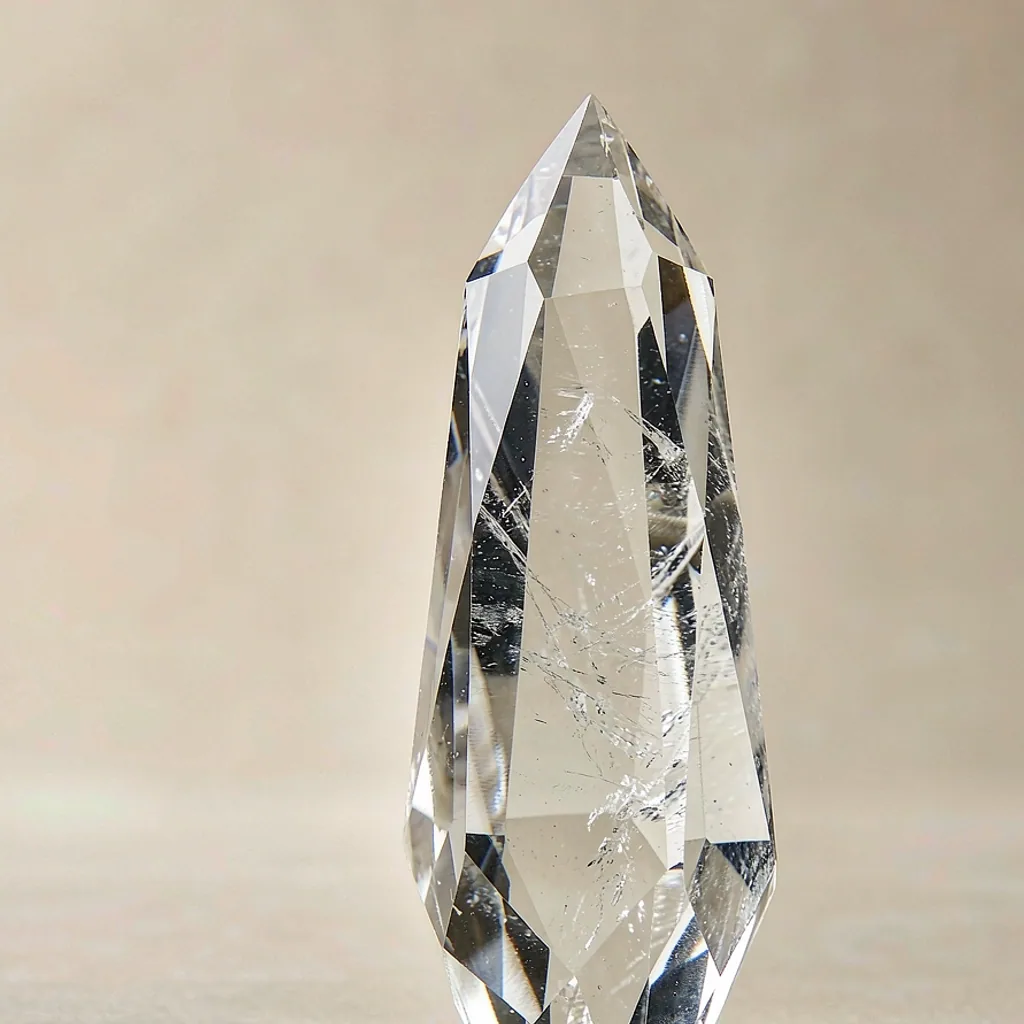
Clear quartz with visible internal fractures, ghost-growth lines and tiny bubbles is natural. Perfectly uniform, water-clear, cheap quartz is usually glass. Real material looks slightly imperfect at close range.
Weight tells you about density, not value
A heavier piece is not automatically better, but it usually means less hollow structure. For towers, a heavy base is what keeps it standing.
Ask three questions
- Is it dyed or heat-treated? (If the answer is "no" and the colour is neon, walk away.)
- Is this the exact piece I will receive, or a representative one?
- What is the hardness? Anything under 5 will scratch in normal handling.
02 — Materials
Treated, dyed and lab-grown: what the label should say
Almost nothing in a crystal shop is untouched. The difference between an honest shop and a dishonest one is whether they say so.
Heat treatment
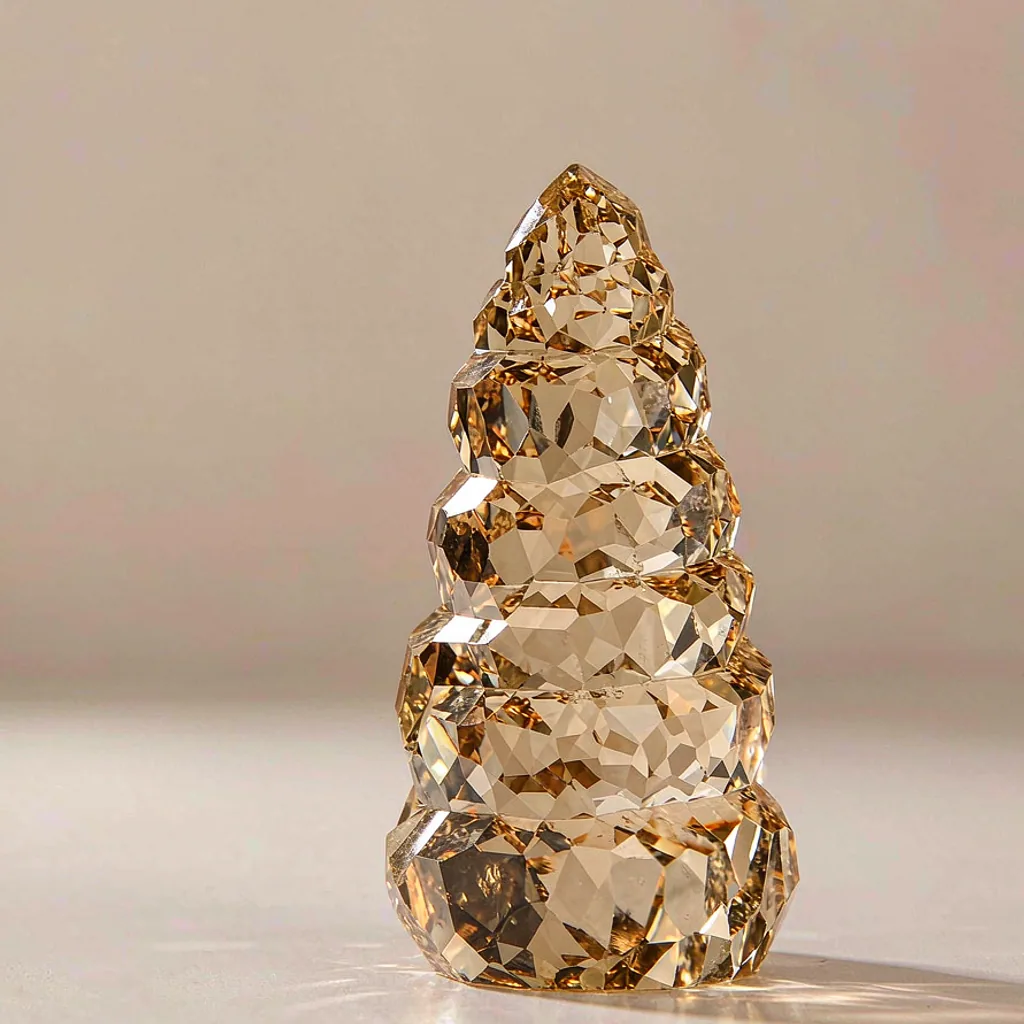
Most citrine sold worldwide is amethyst heated to around 500 °C until the iron shifts from violet to gold. The result is stable, safe, and genuinely pretty — but it is not natural citrine, and natural citrine at tower scale is rare enough to cost four figures. Our citrine is heated, and the listing says heated.
Dyeing
Bright pink "rose quartz", electric blue "aquamarine", magenta "agate" slices — all dyed. Dye sits in cracks and along grain boundaries, so look for colour concentrating in the fissures. Under a phone torch it is obvious.
Irradiation
Smoky quartz is often natural, but very dark near-black smoky quartz is frequently irradiated. It is legal and safe; it is not natural.
Lab-grown
Quartz can be grown hydrothermally, and it looks almost too clean: no fractures, no veils, perfect terminations. Sold as "quartz" it is misleading; sold as lab-grown it is a legitimate product.
The safe assumption
If a listing does not mention treatment, assume there is treatment. Reputable sellers volunteer it because it protects them.
03 — Care
What dissolves selenite, fades amethyst, chips obsidian
Most crystal damage happens in the first week, and almost all of it is water or sunlight.
| Stone | Hardness | Avoid |
|---|---|---|
| Selenite | 2 | Water — it dissolves. Dust dry only. |
| Malachite | 3.5–4 | Water and acid; it is copper-based and will dull. |
| Fluorite | 4 | Storing loose with harder stones; it scratches easily. |
| Obsidian | 5–5.5 | Knocks — it is glass and chips along conchoidal fractures. |
| Moonstone / labradorite | 6–6.5 | Drops. Both cleave along internal planes. |
| Quartz, amethyst, citrine | 7 | Prolonged direct sun — the colour fades over months. |
| Pyrite | 6–6.5 | Humidity. Iron sulphide dulls and can develop rust spots. |
Cleaning, in one paragraph
Dust with a dry microfibre cloth. If a piece is genuinely dirty, rinse briefly in cool water and dry immediately with a towel — but only for quartz-family stones (hardness 7). Everything softer gets a dry cloth and nothing else. Never use ultrasonic cleaners on anything with cleavage, and never use vinegar on pyrite or malachite.
Sunlight
A windowsill is the classic display spot and the worst one for amethyst, rose quartz, fluorite and citrine. The UV fades dyed and natural colour alike. If you love the backlit look, rotate the piece every few weeks.
Storage
Hardness is the only rule: keep soft stones away from hard ones, and never let a quartz point rest against fluorite or selenite in the same bowl. A cloth pouch per piece is the cheapest insurance there is.
04 — Shapes
Tower, cluster, sphere, freeform — what the shape is for
Shape is mostly about how a piece sits in a room, and how much rough it wasted. It has nothing to do with the stone's effect; that part is cultural, not mineral.
Tower / point
Cut from a single block into a six-sided column with a faceted tip. Stands unaided, photographs well, and is the most wasteful cut — which is why towers cost more per gram than clusters of the same material.
Cluster / specimen
Left as it came out of the ground. Cheapest per gram because nothing was cut away, and the most interesting to look at up close, since every point grew in a different direction.
Sphere
Carved from a block big enough to contain the full diameter, so a large flawless sphere is expensive. Catches light from every angle. Also the most likely to roll off a shelf.
Freeform
Polished to the shape the rough allowed, which is how you get maximum flash out of a stone like labradorite without losing half of it to a saw.
Bracelet
The only format you actually use rather than look at. Bead diameter (8 mm, 10 mm) matters more than the stone name for how it wears.